
The Invitation to a Meaningful Life
- a tribute to Sir Ken Robinson-
One of the benefits of technology is that great thinkers enter our world with much more of
their personality; one gets familiar with their voice, their ways of speaking and a greater
sense of who they are. Well, that, in the case of Sir Ken Robinson was such a great gift!
And who won’t miss Sir Ken’s effortless sense of humour with self-deprecating momentous
one-liners and at times, his avuncular tone. What a delightful way to listen to big ideas;
ideas that touched us because there is something universally applicable in them.
During the pandemic, Ken Robinson was inviting us to not return
to normal, as perhaps there is a need for the so called “normal” to look different. He was
encouraging us to regard human beings like an organic gardener who allows growth of
unique beings rather than a farmer that had to produce more and more of the same (Sir Ken
Robinson, 2020).
Just like Montessori, he saw the hidden potential in the human being, and was a great
believer in people, as they have the power to restore and create a world that is joyful and
harmonious, encouraging individuals to follow their unique passion.
I re-watched a lot of his speeches and his philosophy gained more and more meaning. I
extracted a bit of a decalogue around creativity. Here goes:
1. “If you’re not prepared to be wrong, you will never come up with anything original."
Have a go, be curious, find out. (TED, 2007)
2. “Talent is diverse”.
3. “It is not enough to be good at something, you must love it!” (Sir Ken Robinson in RSA,
2010) Being good at something does not guarantee us fulfilment, living our true
passion does…
Because:
4. “It’s not what we do, it’s who we are! “:(Sir Ken Robinson in King Rose Archive, 2019)
5. “Education does not need reforming but a revolution” (TED, 2015) (Sir Ken was never
shy to point out the dysfunction of the main stream educational system and he
advocated for the well being of young people.)
6. “We create our own life and as life is not linear, neither is learning. There is an inner
and outer journey people take in order to find their talents and the way they see the
world is through their unique inner landscape” (King Rose Archives, 2019)
7. “Talent is often buried and we often have to create the conditions for it “(King Rose
Archive, 2019) (In the early years, I link this with a rich environment and an
observant practitioner)
8. “Feeling and knowing should not be regarded as separate”, education should be
holistic and focus also on spiritual aspects of the human being. (Dalai Lama Center
for Peace and Education, 2011)
9. When we are “in our element”, we connect ourselves with ourselves, we find
meaning, joy and a great sense of fulfilment. (King Rose Archives, 2019)
10. “Nothing is as influential as a life well lived! “(Sir Ken Robinson in Tedx, 2014)
The way to honour his legacy, I believe, is to manifest his ideas as best we can, starting with
the journey within and finding meaning and purpose in our lives.
These principles may apply differently according to whatever we may have chosen to do. As
educators, we may aspire to gift the children with a taste of who they are by facilitating
connection of oneself with oneself, through regarding any manifestation of creativity (in its
many forms) as the pathway to spiritual manifestation of who they really are. We may
facilitate environments that create memories of blissful engagement - it’s easier to follow
joy when we have a clear reference of what it feels like.
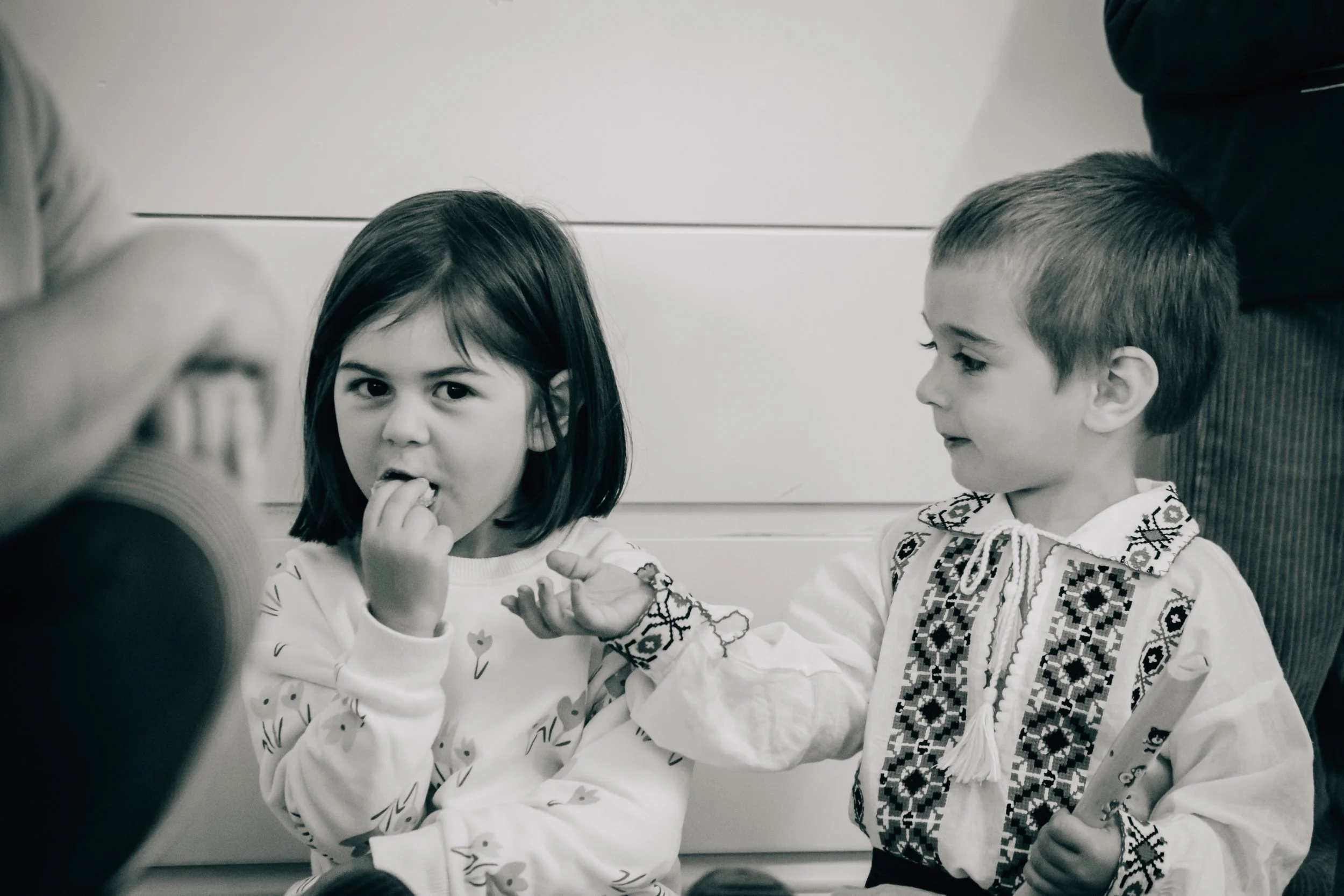
Photo Credit : Jenny Ellen
We may follow the child, follow their threads of thought, whether spoken or not.
Always look beyond and trust their wisdom. Prepare to be wrong, even if you challenge a
well intended idea or system. Remain curious and encourage curiosity in others (children
and adults alike) even when it is uncomfortable, it is often what we don’t know that might
take us further in our discovery and without questioning we might remain dogmatic and
limited.
Be a partner in learning and feeling alongside others and always prioritise meaningfulness
above external pressures whether it’s academic achievement, our expectations or
internalised values that may not connect to the core of ourselves. Remain kind and use our
imagination to see the world from other’s perspective.
